


Say it’s recording day for your podcast. You’ve cleared the desk, the mic is plugged in, there’s a mug of something cooling next to the laptop, and the second you hit record, your voice shrinks to about half its usual size. The cheery opener you practised in the car comes out flat or rushed or with a funny little wobble at the end, as if you’re asking the listener a question you never meant to ask.
Mic nerves are normal, by the way, and nearly every podcaster has had them at some point. They wear off with time, and a few habits can speed that up. Here are the ones that tend to help, starting with the obvious one.
Sort Your Breathing Out First
Nerves mess with your breathing before anything else. It gets quick and sits up in your chest, and your voice follows it up there, so you end up sounding a bit breathless on those first few episodes without really knowing why.
A lot of voice coaches use a four-in, six-out count for this exercise. You breathe in through your nose for about four, then out through your mouth for six or seven, keeping a hand on your belly so you can tell whether it’s your stomach or your shoulders moving. If it’s your shoulders, you’re still breathing from the top, so slow it right down and have another go. Five or six rounds is usually plenty, more if today’s guest is a big deal to you.
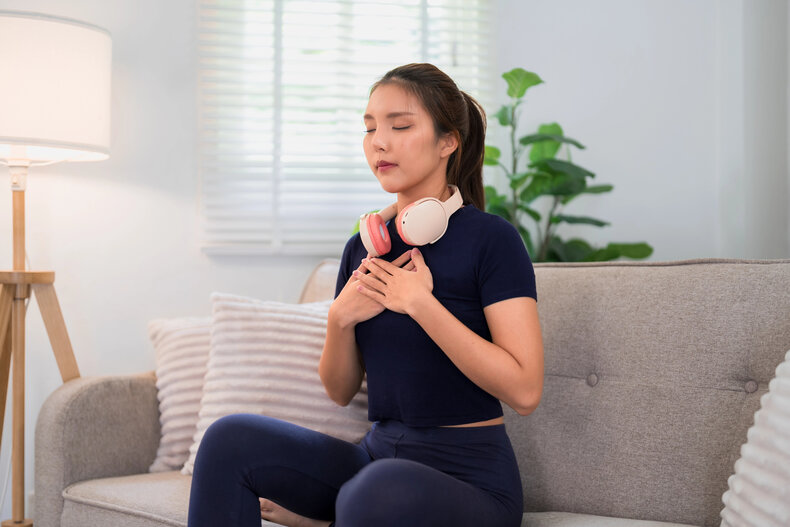
The long breath out is what calms you down. Your body takes it as a signal that you’re safe, and you are: it’s only a microphone. Most people find their voice comes out a little lower and steadier straight afterwards.
Warm Up Your Voice
Singers warm up and so do actors, yet plenty of podcasters sit down cold and expect their voices to behave from the very first syllable. Three minutes is enough. A few that work well:
- Lip trills. Blow air through loose lips so they flap, and slide your pitch up and down as you go
- Sirens on the “ng” sound at the end of “sing”, low to high and back (close the door for this one)
- The tongue twister “red lorry, yellow lorry,” slow at first and then quicker until you mess it up
- A really big yawn, ending in a sigh
After that, a few sips of warm water or tea with honey if you’ve got it. Many hosts also skip milk for an hour or so before recording. It can leave a film in your mouth, and a coated or dry mouth makes the clicky noises that the mic picks up, and you’ll hear every one of them in the edit.
Give Yourself a Little Ritual
Doing the same handful of things before every episode helps more than you’d think. After a few weeks, your brain starts treating them as a cue that everything’s fine. It can be very ordinary stuff. Clear the desk, pour a glass of water, check your levels, read the intro out loud once, and put your phone in another room. That’s it.
Some people make listening part of it. Ten minutes of a podcast you love, in a calm and chatty register, puts you in the mood for conversation. Something slow and reflective works best, like one of the gentler astrology podcasts, partly because it pulls your mind off your nerves and on to somebody else’s voice.
Talk to One Person
It’s hard to sound natural when you’re talking to a crowd of listeners you can’t see. So pick one person and talk to them instead. It works best if it’s someone real, like your sister on the bus home or a mate washing up with an earbud in. You’ll slow down without meaning to, and you’ll tell jokes the way you’d tell them to a friend, which is how they’re meant to sound anyway.
A few presenters prop a photo of a friend against the mic stand for exactly this purpose. It looks slightly unhinged to anyone who walks in. Give it a week, and you stop noticing it.
It can help to talk to a real person before you hit record, too. Some hosts would rather talk it out with someone first, a co-host or a partner, or even a reader. If that last one sounds like you, Nebula has 3 free minutes with psychic, which is about long enough to get whatever’s knotting your stomach off your chest before you sit down.
Slow Down, Then Slow Down a Bit More
The tricky part is that you can’t hear your own speed while you’re nervous. Something that feels relaxed while you’re saying it can sound rushed when you listen back, like you’re trying to get it all out before someone cuts you off. Try slowing down by about ten per cent, which will feel ridiculous, and leave a small pause at the end of each point. People hear those pauses as confidence, and they give you somewhere to breathe.
If you get a line wrong, just stop, take a breath, and start the sentence again. You can cut the mistake out later. I wouldn’t cut every single one, though. Leaving a few stumbles in makes it sound like a real person talking rather than reading, which is a big part of why people listen to podcasts.
Loosen Up Physically
Tight shoulders and a clenched jaw make your voice tight too, and you usually only notice it when you play the episode back. So before you start, roll your shoulders a few times, shake out your hands, and rub your jaw in front of your ears with a couple of fingers. It feels odd at first, but it does help.

Some podcasters prefer to record standing up because it keeps them from slouching, leaving more room to breathe and freeing their hands. Hand movements can even be heard in the voice: in a 2020 study published in PNAS, listeners could pick up a speaker’s arm movements from the audio alone. If you’ve never tried it, record one segment standing and one sitting and listen to both.
Be Kind to Yourself at Playback
The way you listen back matters more than most people expect. If you sit there with a pen tallying every “um,” guess what your brain learns about the mic? That it’s an exam. So go through the episode once, for the big stuff only, scribble two notes (a bit you liked, one thing to change), and then shut the laptop and go and make a sandwich.
A scrappy log helps too: episode number, a line on how the recording felt, and done. Months later you’ll flick back and wince at how anxious the early entries were, and weirdly that’s the most reassuring part.
Calm Habits Away From the Desk
How you sleep and what you drink in the days before a podcast recording also make a difference, because tiredness and too much caffeine both make anxiety worse. Go for a walk without your phone, or stretch for ten minutes in the morning. Try to get to bed at a sensible time the night before, and maybe skip that third coffee. It’s boring advice, and it works. Pick one, stick with it for a couple of weeks, and see if you notice anything.
Final Thoughts
If you’re only going to try one thing, start with the breathing. Once your voice drops back down to where it normally sits, the rest gets a lot easier. After a few episodes, add the warm-up and later, a little ritual. You’ll probably find the red recording light stops bothering you much sooner than you expect. And if the nerves don’t ease at all after a couple of months, or they start spilling into the rest of your week, it’s worth mentioning performance anxiety to your GP.
Share: