
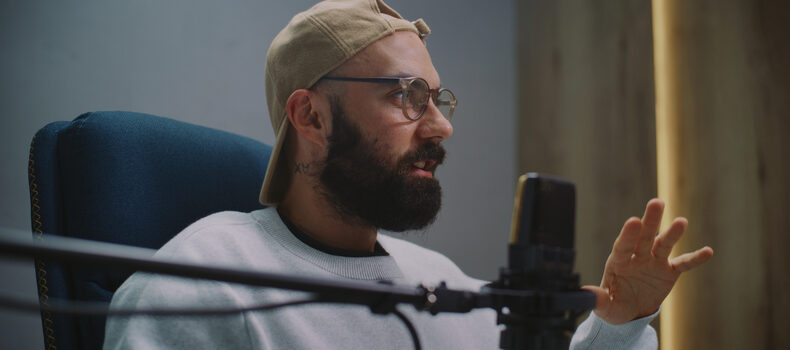
Audio creators tend to fall into two camps. Some record a weekly interview show that people can still discover a year later. Others go live most evenings and chat with whoever turns up. Both are making audio, yet the work, the audience and the money behave quite differently. This guide looks at each route through one well-known platform: Spotify for Creators for recorded shows and Bigo Live for live broadcasts.
Recorded shows: Spotify for Creators
Spotify for Creators costs nothing to use. According to The Podcast Consultant’s 2026 review, there are no monthly fees and no storage cap, and new episodes appear on Spotify as soon as they’re published. Getting onto Apple Podcasts takes one extra step, as the creator has to submit the show’s RSS feed through Apple Podcasts Connect.
Video hosting is free as well, which goes some way to explaining why the review counts more than 430,000 video podcasts on Spotify. Creators who host elsewhere can benefit without moving. Since January 2026, shows hosted with Acast, Audioboom, Libsyn, Omny or Podigee can publish and monetise video on Spotify through its Distribution API. For anyone who does want to switch completely, Spotify’s migration tool brings a show across in about 15 minutes.

Getting paid
Monetisation runs through the Spotify Partner Programme, and in January 2026 Spotify made it far easier to qualify. A show now needs three published episodes, 2,000 hours consumed and 1,000 engaged listeners, with the last two measured over the previous 30 days. Until then the bar sat at 12 episodes, 10,000 hours and 2,000 listeners. Creators also have to be based in an eligible market, and on 17 September 2026 Spotify announced that the programme would reach more than 35 new markets this autumn.
Spotify keeps 50% of ad revenue, according to the review. Premium video revenue is paid on top of that whenever Premium subscribers watch an episode, and Spotify’s own announcement confirms that creators keep all of the money from sponsorships they embed themselves. Analytics are aggregated, so creators can follow trends across their audience but won’t see data on individual listeners.
Limitations to know about
Audience Network ads are invite-only, and Spotify can switch them off if a show goes six months without a new episode. Paid content has changed this year: subscriber-only episodes have given way to Memberships, which carry a 10% platform fee on top of payment processing costs. Listener Support, the old tipping feature, closed on 2 January 2025. The review also notes that support can be slower to respond than at paid hosting services.
How big is Spotify’s audience?
In its results for the second quarter of 2026, published on 4 August, Spotify reported 777 million monthly active users (up 12%) and 300 million Premium subscribers (up 9%). Those totals cover the whole service, music listeners included, so they show the size of the pool a podcast can draw from. How many of those people press play on a given show is down to the show itself.
Live audio: Bigo Live
Live streaming works very differently. The host broadcasts in real time, viewers comment as it happens, and many of them send virtual gifts that turn into income for the host. Bigo Live, owned by JOYY, is one of the best-known apps built around this model.

JOYY’s second-quarter 2026 results showed total revenue of $590.8 million (up 16.3%), live streaming revenue up 7.3%, core live streaming paying users up 3.9% and average mobile monthly active users of 277.1 million (up 5.5%). These figures cover the whole group, of which Bigo Live is only one part.
One number in the report relates to Bigo Live alone. In May 2026, AI-generated and interactive virtual gifts accounted for 34.3% of all virtual gift spending on the platform.
Paying for gifts
Viewers buy gifts with in-app credit. Some outside stores sell that credit too, LootBar among them. It describes itself as a global seller of top-ups, gift cards and game keys, and it has a bigo live recharge option. Before buying there, a viewer should check that the product matches their region, read the refund and delivery terms, and never share their account password.
Three questions to answer first
- Does the creator want a back catalogue that keeps working, or a live event that happens once?
- Does the show need video, and does the platform support it natively?
- Can the show realistically reach the monetisation threshold, or will gifts provide most of the income?
Choosing a format
Recorded platforms reward an on-demand archive and audience growth over months and years. Live apps reward direct contact with viewers and the income that gifts bring in. Many creators end up doing both, publishing episodes through a podcast host and using live sessions to build a following between releases.
A short trial is the most reliable way to decide. Publish three episodes on a free host, run four live sessions, and compare listeners, returning visitors and income across both. Industry figures describe the market as a whole, while a few weeks of real results will show which format works for one particular creator.
Share: