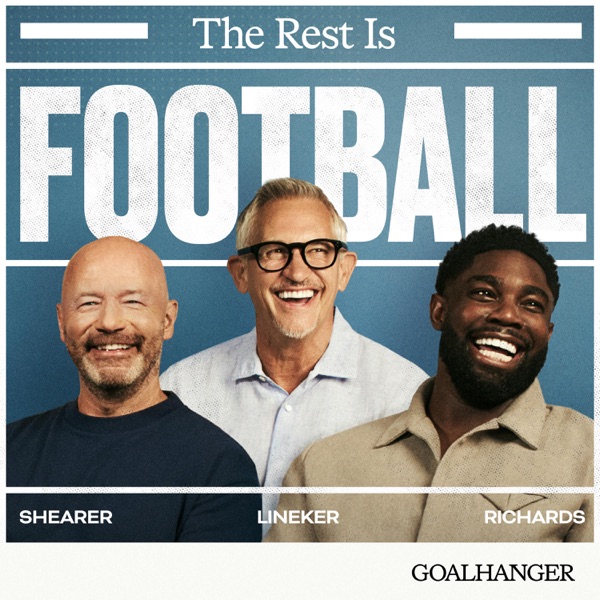

Disney+ confirmed on 13 August that it has signed a one-year exclusive agreement with The Overlap, becoming headline sponsor of “Stick to Football” and of a brand-new show, “Stick to United with Wayne Rooney”, for the 2026/2027 season. “Stick to United” streams weekly from Tuesday 18 August and “Stick to Football” from Thursday 20 August, on Disney+ in the UK and Ireland.
On the surface this is a sponsorship announcement with a famous cast. Underneath it is something British podcasting has not seen at this scale: a YouTube-first show keeping its free YouTube audience while a global streaming service pays to put the same programme in front of subscribers and commissions extra episodes of its own. Our reading is that the money here is coming out of a television commissioning budget rather than an audio advertising budget, and that is a different economy from the one most UK podcasts sell into.
What has been confirmed
The detail is in Disney’s own press release. Forty brand-new episodes of “Stick to Football” will be available on Disney+ alongside existing streaming platforms and The Overlap’s YouTube channel, with 20 of them exclusive to Disney+ for a limited time. Disney+ has separately commissioned six additional episodes, made outside the UK, exclusively for the service.
“Stick to United with Wayne Rooney” launches with 50 episodes on Disney+, again alongside existing platforms and The Overlap’s The United Stand YouTube channel, with extended episode content exclusive to the streamer. Both the six exclusives and the extended episodes were commissioned by Sean Doyle, VP, Unscripted, Disney+ EMEA, and Angela Jain, Head of Content, Disney+ EMEA.
“Stick to Football” is hosted by Gary Neville, Jamie Carragher, Jill Scott, Ian Wright and Roy Keane. The new show pairs Wayne Rooney with Mark Goldbridge, the Manchester United fan broadcaster whose channels The Overlap bought in April.
One thing is worth reading twice. Disney’s release specifies the UK and Ireland, while Neville’s quote in the same release refers to “Disney+’s incredible global streaming audience”. Nothing published so far confirms availability in other Disney+ territories, and that gap between the announced footprint and the language around it has not been resolved by either company.
What the companies have said
Neville’s position is that nothing is being taken away. “We’re not changing who we are,” he said. “Our community will continue to enjoy our content in exactly the way they always have through YouTube, while at the same time Disney+’s incredible global streaming audience will now be able to discover and enjoy it too… It’s a partnership that expands our reach without compromising our identity.”
Global, which owns the majority of The Overlap, framed it as validation. In the announcement issued through The Overlap, group chief executive Simon Pitts said the company “is already one of the UK’s most successful sports entertainment brands and this exciting new partnership with Disney+ now gives it the worldwide platform it deserves”, adding that the growth plan “fits perfectly with our goal for Global Studios to be the home of the best audio and video brands on the planet”.
Disney’s framing is about category expansion rather than audio. Sean Doyle described the deal as part of “a new era of sports entertainment on Disney+” and said the two shows broaden its local original content offering “as we continue to expand into new sports formats”. Read plainly, Disney is buying British sports talk as television programming, and the podcast label is incidental to what it is paying for.
The Global machine behind the deal
The Overlap was founded in 2021 by Gary Neville. Global acquired a majority stake in January 2026 and placed it inside Global Studios, the group’s video-first podcast division. In April, The Overlap bought Mark Goldbridge’s YouTube channels, The United Stand and That’s Football.
Put those three moves in order and the strategy is legible. A British radio and outdoor group bought a YouTube-native football brand, bought a second YouTube-native football audience to sit beside it, and has now sold the combined output to a streaming service as commissioned content. The likely consequence is that other UK audio groups treat this as a template: acquire creator-led video brands, then licence them onward. The Royal Television Society, reporting the deal, called “Stick to Football” The Overlap’s “flagship visualised podcast”, which is a fair description of what Disney+ has actually bought.
The scale figures in The Overlap’s own release explain why a streamer is interested, and they also say something uncomfortable about the word podcast. Its 2026 FIFA World Cup coverage generated more than 250 million views across all platforms — 46.9 million on YouTube, 203.4 million across social media, and 2.25 million audio streams. Audio is under one per cent of that total. On those numbers this is a television business with a podcast feed attached, and the deal has simply followed the audience.
What it changes for British podcast economics
The mechanics are the interesting part. A streaming service is acting as headline sponsor rather than as one advertiser among several, and it is commissioning original episodes in the same agreement. That collapses two revenue lines — sponsorship and content licensing — into a single deal, and it means the price is set against a commissioning budget rather than against podcast advertising rates.
The likely effect is that Britain’s biggest video podcasts move out of reach of the sponsors who have funded them until now. If a streamer will pay content money for a show, an audio sales house bidding CPMs is no longer in the same auction. That is good news for a handful of shows at the top and unhelpful for everyone selling against them.
The windowing is the genuinely new part for listeners. Twenty episodes will sit with Disney+ subscribers for a limited period before reaching YouTube: television logic applied to a show whose audience is used to everything arriving free and immediately. Our reading is that the risk here is habit rather than revenue, because a weekly show trains people to turn up on a day, and a delay teaches some of them not to.
The context is a UK audience that has already moved to watching. Edison Research reported in July that 29% of weekly UK podcast listeners now name YouTube as the service they use most, ahead of Spotify on 28% for the first time on record. A deal built around video distribution is aimed squarely at where that audience has gone, which is why so many of the best sports podcasts in Britain now film every episode.
What to watch this season
What nobody has confirmed yet is what happens to the audio. Neither release mentions the podcast feeds, whether audio versions of the 20 windowed episodes will be delayed in the same way, or whether the six Disney+ exclusives will appear in audio at all. For anyone who listens rather than watches, that is the practical question, and it is unanswered.
The term is the other thing to diarise. This is a one-year agreement covering the 2026/2027 season, so the renewal conversation lands around next summer, and it will be settled by whether Disney+ can show subscriber numbers moving because of football talk. Our reading is that if it can, several more British shows will be having the same conversation by this time next year.
For now the effect on listeners is small and the effect on the market is not. The shows carry on, free, on YouTube, alongside the rest of the entertainment podcasts people watch as much as hear. What has changed is who is paying for them, and a streaming service commissioning episodes of a British football podcast sets a price that the rest of the industry now has to live with.
Share: