

Listen on Audible for free
Try for 30 days, you can cancel whenever you want
Dave Portnoy Tells the Story Behind the Barstool Empire
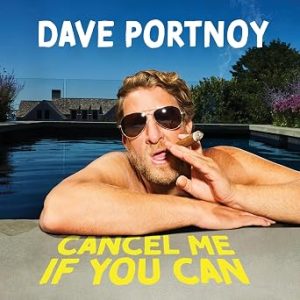
Love him or hate him, Dave Portnoy has spent more than two decades refusing to be ignored. In Cancel Me If You Can, the founder of Barstool Sports looks back on the unlikely rise of one of the most influential—and controversial—digital media companies of the internet era. The result isn't a conventional memoir or a polished business manual. Instead, it's a fast-moving account of entrepreneurship, internet culture, public controversy, and relentless self-belief, told with the same unapologetic voice that turned Portnoy into a media personality in his own right.
The book opens where every Barstool fan expects it to: a four-page sports newspaper handed out on the streets of Boston in 2004. At a time when sports coverage was still dominated by newspapers and television networks, Portnoy saw an opportunity to write for ordinary fans instead of broadcasting to them. His tone was informal, opinionated, and intentionally provocative, mirroring conversations taking place in sports bars rather than television studios.
That instinct proved remarkably prescient. As blogs, podcasts, YouTube, and social media transformed the media landscape, Barstool evolved alongside them, eventually becoming a nine-figure company with hundreds of employees and dozens of influential personalities. Cancel Me If You Can traces that evolution while emphasizing the risks, failures, and sheer persistence that accompanied every stage of its growth.
More Than a Memoir, Less Than a Business Book
One of the book's most interesting qualities is that it deliberately resists easy categorization. Portnoy himself insists this isn't a memoir, and he's right—at least in the traditional sense. Readers looking for an introspective examination of childhood or deeply personal reflection may be surprised by how little time the book spends looking inward.
Instead, the narrative focuses almost entirely on decisions. Why launch a newspaper when digital media barely existed? Why double down on controversial content when advertisers pushed back? Why continue expanding into sports betting, pizza reviews, live events, and creator-driven media while competitors chased safer strategies?
The answer, according to Portnoy, is simple: because betting on yourself is always worth the risk.
That philosophy runs through every chapter. Success is presented not as the product of perfect planning, but as the cumulative result of repeatedly taking chances when failure seemed far more likely than victory.
A Window Into the Evolution of Digital Media
Beyond Portnoy's own story, Cancel Me If You Can also functions as a fascinating chronicle of how digital media changed over the past twenty years.
Barstool's growth mirrors the rise of creator-driven platforms, personality-based brands, and communities built around authenticity rather than traditional journalism. Portnoy argues that audiences increasingly wanted voices that felt genuine—even abrasive—over carefully managed corporate messaging.
Whether readers agree with that philosophy or not, it's difficult to deny how influential Barstool became in shaping modern sports media. Many of today's creator-first business models echo strategies that Barstool embraced years before they became industry standards.
The book also explores Portnoy's expansion beyond sports journalism. His enormously popular pizza reviews became an unexpected cultural phenomenon, while his ventures into sports betting further strengthened his personal brand. More recently, his fundraising efforts for struggling small businesses during the pandemic and his advocacy for animal shelters—often alongside his rescue dog, Miss Peaches—revealed a side of his public persona that receives far less attention than his controversies.
Controversy Is the Point—Not the Side Story
The title Cancel Me If You Can isn't simply clever marketing. It reflects one of the book's central arguments: that public outrage has become an unavoidable reality for anyone unwilling to moderate their opinions.
Portnoy recounts numerous conflicts with journalists, critics, online campaigns, and corporate partners. He presents these moments not as isolated incidents but as recurring consequences of building a brand around complete candor.
Importantly, the book rarely attempts to offer a balanced examination of those disputes. Readers should approach it understanding that this is Portnoy's version of events, told from his perspective and with little interest in presenting opposing viewpoints. That subjectivity is both a limitation and part of the book's appeal. Rather than pretending to be objective, Portnoy fully embraces the role of narrator, advocate, and occasionally defendant in his own story.
Dave Portnoy's Narration Feels Like an Unfiltered Conversation
As with many celebrity memoirs, having the author narrate the audiobook significantly enhances the experience.
Portnoy doesn't perform the material so much as he talks through it. His delivery feels conversational, energetic, and completely consistent with the personality millions of listeners already know from Barstool content. The humor lands naturally, the frustration feels genuine, and even quieter moments retain an authenticity that might have been lost with another narrator.
At just over eight hours, the audiobook moves quickly without feeling rushed. The pacing mirrors Portnoy's communication style: direct, efficient, and constantly moving toward the next story.
A Polarizing Book That Doesn't Pretend Otherwise
Perhaps the greatest strength of Cancel Me If You Can is its complete lack of interest in winning over skeptics.
Portnoy knows many readers will disagree with him, question his decisions, or reject his worldview entirely. The book never attempts to soften his personality or rehabilitate his public image. Instead, it argues that authenticity—even when messy, controversial, or commercially risky—is ultimately more valuable than broad approval.
That won't resonate with everyone. Some readers will see confidence; others will see stubbornness. Some will admire his willingness to ignore criticism; others will view it as an unwillingness to engage with legitimate accountability. The audiobook leaves ample room for those interpretations, even if Portnoy himself clearly favors one.
Regardless of where listeners fall, Cancel Me If You Can succeeds as an inside look at one of the internet's most unconventional business success stories. It's entertaining, fast-paced, occasionally insightful, and undeniably reflective of the personality behind Barstool Sports. For anyone interested in modern media, creator entrepreneurship, or the mechanics of building a brand through controversy rather than despite it, this audiobook offers a compelling firsthand account from one of the industry's most recognizable—and divisive—figures.
This content contains affiliate links. When you buy through these links, we may earn an affiliate commission. Host: Dave Portnoy
Country: United States
Average duration: 8 hours and 4 minutes
Frequency: Audiobook
Producer: Audible
Country: United States
Average duration: 8 hours and 4 minutes
Frequency: Audiobook
Producer: Audible
Audiobooks like Cancel Me If You Can
 Flybot
 The Let Them Theory: A Life-Changing Tool That Millions of People Can’t Stop Talking About
  Onyx Storm: Empyrean, Book 3
 Nexus: A Brief History of Information Networks from the Stone Age to AI
 Odyssey: Stephen Fry's Greek Myths, Book 4
 The Margate Murders
 We Solve Murders
 Not Till We Are Lost: Bobiverse, Book 5
 The Wonder of Stevie
 Adam Buxton's Successpod
 French & Saunders: Titting About (Series 7)
 Harry Potter and the Goblet of Fire (Full-Cast Edition)
 Harry Potter and the Half-Blood Prince (Full-Cast Edition)
 Harry Potter and the Order of the Phoenix (Full-Cast Edition)
 Harry Potter and the Philosopher’s Stone (Full-Cast Edition)
 Harry Potter and the Prisoner of Azkaban (Full-Cast Edition)
  It Could Have Been Her
 Jilly Cooper's A Pressing Engagement
 Michael
 Poison Garden: The DCI Ryan Mysteries, Book 22
 Recall
 Red Dwarf: Titan
 Swan Song: Diana, my sister
 The Hotel Avocado
 The Murder at the Vicarage
 The Other Patient
 Vibe: The Secrets of Strong Connections in a Lonely World
 We Chase Shadows
 A Deadly Episode
  A Great Book with Barack Obama