

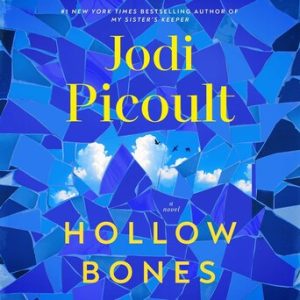
Listen on Audible for free
Try for 30 days, you can cancel whenever you want
Molly Fitzgerald was two months old on the morning her mother walked into the World Trade Center for an appointment and did not come out. Twenty-five years later she runs emergency preparedness for the state of Rhode Island. She writes the plans for hurricanes, epidemics and plane crashes, down to how you would get the babies out of a neonatal intensive care unit. Her whole adult life is an attempt to make sure nobody else loses a parent to a disaster no one saw coming. Then the disaster turns up inside her own house.
Her husband Jesse is a police polygraph examiner. His job is catching lies, and his childhood taught him what a family in crisis looks like from the inside. The two of them have built something steady, and they are expecting their first child. What upends them is not a storm or an attack. It is slower and harder to name, and it drags up a quarter century of things the people around Molly have kept from her in order to keep her safe.
Readers who know Jodi Picoult will recognize the shape. A big public subject, a family at the center, chapters that move between past and present, and an institution waiting somewhere down the line. What is new is how personal the material feels, and how hard she leans into the mother and daughter story at the heart of it.
Two timelines and one very large secret
Publishers Weekly described the book as a dual narrative about a mother and a daughter who each build a new life in response to trauma. The present-day strand belongs to Molly and Jesse. The other runs back to 2001 and follows Molly's mother, Eloise, and that is where the novel's real question sits. Picoult has said the idea came from a PostSecret postcard showing the Twin Towers with the words "everyone who knew me before 9/11 thinks that I'm dead." She could not stop wondering who would use a tragedy of that size to disappear, and what might bring them back. I will leave it there.
The novel's other subject is postpartum psychosis. Picoult has said it affects about one in five hundred mothers and is badly underdiagnosed, and that a woman in prison who had lived through it wrote asking her to be her voice. That urgency comes through. The chapters where you sit inside a mind as it loses its grip on what is real are the most frightening thing she has written in years. Listeners should know the story also touches suicide, abuse and religious trauma.
What the critics say, and one fair caveat
Kirkus gave the book a starred review, calling it "impressive, important, and fun to read" and "an intricate, twisty family drama," and singled out the banter between Molly and Jesse. Booklist called it "powerful and deeply affecting" for the way it shines a light on postpartum psychosis. People called it "riveting and relentless."
Publishers Weekly was cooler. It found the novel poignant but heavy-handed, with two major twists that feel contrived even if they yield real insight into mothers and daughters. That is a fair warning. The final stretch reaches for plot, and some listeners will feel the book was already strong enough without it. The research is not in question. Picoult logged around fifty hours of interviews with Rhode Island's real emergency preparedness director, sat in on training sessions, and learned to run a polygraph with a New Hampshire officer. The procedural details land, and they are a large part of why Molly feels like a real professional rather than a symbol.
Why the audio edition earns its length
This is a long listen, well over fifteen hours, and Random House Audio was right to split it among several voices. Rebecca Soler, MacLeod Andrews and Julia Whelan carry the main strands, and Picoult herself reads a short part of the edition. All three narrators are veterans with award shelves to prove it, and they are well matched to this kind of book: close third person, lots of dialogue, long passages of a character arguing with herself.
The practical benefit is navigation. A novel that jumps between 2001 and the present, and between a mother and a daughter, can blur when you listen in the car or on a walk. A change of voice tells you where you are without a chapter heading. The polygraph scenes, which are essentially interrogations, play especially well out loud. The edition also includes a downloadable PDF with the reference material and acknowledgments, which is worth a look once you finish, because the sources behind the postpartum psychosis storyline are real and sobering.
The husband you may already know, and the writer behind him
Jesse Fitzgerald is the troubled teenage brother from My Sister's Keeper, now grown up and on the other side of the law. Hollow Bones stands on its own, and nothing in it depends on remembering the earlier book. Longtime readers will get a jolt of recognition, and a quiet answer to a question many of them have carried since 2004.
Picoult is one of the most widely read American novelists working. Hollow Bones is her thirtieth novel, and roughly forty million copies of her books are in print. The best known remains My Sister's Keeper, which became a 2009 film she has openly said she disliked because it changed her ending. More recent titles include Mad Honey, Wish You Were Here and By Any Other Name. She does her own research, which she calls the best part of the job, and lives in New Hampshire.
If you have never read her, this is a good door in. If you have, it is one of her stronger recent books, flawed ending and all. The Audible free trial covers it.
This content contains affiliate links. When you buy through these links, we may earn an affiliate commission. Host: Rebecca Soler, MacLeod Andrews, Julia Whelan
Country: United States
Average duration: 15 hours and 39 minutes
Frequency: Audiobook
Producer: Audible
Country: United States
Average duration: 15 hours and 39 minutes
Frequency: Audiobook
Producer: Audible
Audiobooks like Hollow Bones
 The Madman's Hotel
 London Falling
 Murder at the Grand Alpine Hotel
 The Margate Murders
 We Solve Murders
 The Mysterious Affair at Styles
 Adam Buxton's Successpod
 Harry Potter and the Deathly Hallows (Full-Cast Edition)
 Harry Potter and the Goblet of Fire (Full-Cast Edition)
 Harry Potter and the Half-Blood Prince (Full-Cast Edition)
 Harry Potter and the Order of the Phoenix (Full-Cast Edition)
 Harry Potter and the Philosopher’s Stone (Full-Cast Edition)
 Harry Potter and the Prisoner of Azkaban (Full-Cast Edition)
  Land
Land Michael
 Reasonable Doubt: Examining the Case of Lucy Letby
 Recall
 Swan Song: Diana, my sister
 The Castle: Adventures in a World of Unravelling Men
 The Murder at the Vicarage
 The Other Patient
 Unleashed
 Vibe: The Secrets of Strong Connections in a Lonely World
 We Chase Shadows
 A Deadly Episode
  A Great Book with Barack Obama
 A Parade of Horribles: Dungeon Crawler Carl, Book 8
 Backfired: Attention Deficit
 Big Little Truths
 Boom Town