
Longevity is like maintaining a classic vinyl record collection. You don’t restore it once. You preserve it through tiny habits—humidity checks, proper storage, the right cleaning cloth—performed long before damage is visible. Podcasts give you those tiny habits.
Because here’s something most people don’t realize about longevity podcasts: the best ones aren’t just long interviews with smart people. They’re time machines. Not because they predict the future, but because they let you borrow someone else’s decades of mistakes so you don’t repeat them at 50, 60, or 80. I always knew audio was good company, but it still caught me off guard when the protocols, the numbers, and the long-term study data stuck in my head as if I’d memorized them.
So let’s get into the shows that actually move the needle.
The Peter Attia Drive
The podcast that turns cutting-edge longevity science into precise, actionable frameworks you can actually follow.
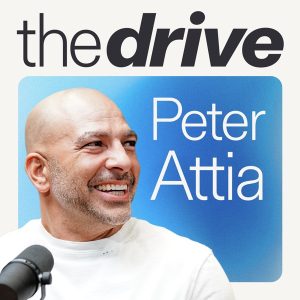
Attia has built his podcast around applied longevity—what he calls the “medicine 3.0” approach. You’re not just listening to interviews; you’re listening to frameworks. VO₂ max thresholds, zone-2 training specifics, protein timing, ApoB targets under 60 mg/dL. He’s meticulous, sometimes to the point of discomfort.
Here’s what I mean: in one episode on centenarian decathlons, he breaks down physical tasks your 90-year-old self should still perform, then reverse-engineers the training demands for your 40-year-old body. Nobody else defines ageing in terms of future physical jobs. It’s grounding. And it’s extremely motivating when you’re staring at a barbell you don’t want to touch.
His conversations with researchers like Matt Kaeberlein and Tommy Wood are dense but digestible—especially if you like data paired with real-world application. If you want a longevity “degree,” start here.
Lifespan with Dr. David Sinclair
A front-row seat to the breakthroughs reshaping how fast—and how well—we age.
Sinclair takes a different lane. He’s less about daily practice and more about mechanisms—sirtuins, NAD metabolism, epigenetic drift. Yes, he’s polarizing. Yes, some critics say his timelines for ageing reversal are ambitious. But he’s also the one who helped show that reprogramming with OSK factors could restore vision in mice after optic nerve injury.
Consider this: he often cites the human data on NMN uptake being mixed, while encouraging people to focus more on lifestyle levers with proven outcomes—cold exposure, low-impact hormesis, and dietary restriction patterns that actually stick.
When he talks about partial cellular reprogramming edging closer to human trials, there’s a noticeable lift in his tone. You might question the pace or buy into the possibility, but either way you’re left chewing on ideas that won’t leave you alone.
Huberman Lab
The show that hands you research-backed protocols to upgrade your body and brain, starting today.
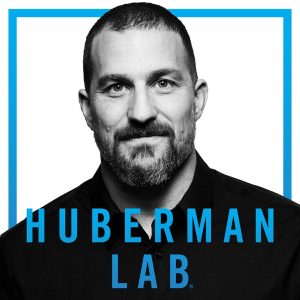
If Attia is the architect and Sinclair the theorist, Huberman is the operator. He gives protocols. Directly. Clearly. Sometimes overwhelming in their specificity, but useful when you want to act today.
His ageing content often runs through the lens of neuroplasticity, circadian biology, and hormone regulation. A listener favorite from 2025: the episode outlining a 90-minute heat exposure protocol per week improving cardiovascular and metabolic markers, with references to the Finnish sauna studies showing a 40% reduction in all-cause mortality among high-frequency sauna users (like me).
The sensory descriptions help—Huberman talks about how heat stress “feels,” the wave of discomfort that signals norepinephrine spikes, the cool-down shiver that increases brown fat activation. You get the science and the body awareness.
And yes, his episodes are long. But longevity is long work.
Longevity by Design
Clear, data-driven conversations that translate complex ageing science into simple weekly wins.
Hosted by Dr. Gil Blander and Ashley Reaver, this show gets straight to the point. You get tighter interviews, clear takeaways, and none of the drawn-out back-and-forth that slows other longevity podcasts down.
They bring in researchers who explain methodologies: methylation clocks, proteomics, longitudinal cohort design. You’ll hear about real numbers—like how a specific dietary shift decreased biological age by 3.2 years in an eight-week nutrition intervention. They avoid hype and stick to what can be measured.
The result? You leave each episode knowing one thing you’ll apply that week. Maybe it’s increasing soluble fiber for lipid control or adjusting training volume for recovery.
If you want longevity science without emotional fireworks, here’s your show.
AGEIST
Inspiring real-life stories proving that your 50s, 60s, and 70s can run on more energy than your 20s.
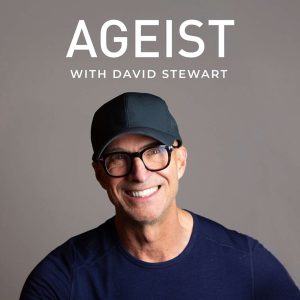
AGEIST flips the script. It doesn’t obsess over years left; it obsesses over life quality. Stewart interviews people in their 50s, 60s, 70s who live with more energy than most 25-year-olds. Real humans.
One episode that really stayed with me is the conversation with Adam Smith, the spiritual wellness expert from Canyon Ranch. Something about the way he talked about ageing—not as decline, but as a shifting relationship with uncertainty—hit me harder than I expected. His take on flow being “absolute cooperation with the inevitable” might be the most grounded description of ageing I’ve ever heard on a podcast. And his reminder to “do unimportant things” so life doesn’t turn stiff or joyless has quietly changed the way I move through my week. It made me realise that longevity isn’t only measured in biomarkers; it’s also in your capacity to breathe, to pay attention, to stay curious as the years stack up.
This is where you learn that ageing isn’t only about molecules. It’s about identity. How you act. What you believe you’re still capable of. And sometimes that message lands harder than another study on rapamycin half-life.
LEVITY
A calm, science-rooted guide to small daily habits that quietly transform how you age.
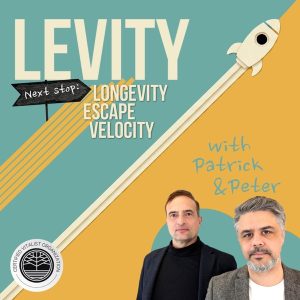
LEVITY is a smaller show, but don’t underestimate it. Ossjö offers a pretty good mix of science interviews with a calmer tone—almost like he’s sitting across from you in a quiet room. He highlights micro-behaviors: breathwork patterns changing HRV, morning mobility routines adjusting lower-back stiffness, weekly reflection practices improving stress biomarkers.
What surprised me about LEVITY is how grounded it feels, even when the guests are talking about life-extension tech that sounds pulled from 2045It’s the rare longevity podcast that leaves you curious, not overwhelmed, and somehow more motivated to experiment in your everyday life.
Want a show that makes the future feel closer without making it feel impossible? This is it.
The Human Upgrade: Biohacking for Longevity & Performance
Bold biohacking ideas and high-performance experiments that push the limits of what’s possible for long-term health.

Asprey is the original biohacking showman. You may not agree with everything he says—and you shouldn’t—but he’s often ahead of the curve. He talks openly about mitochondrial efficiency, sleep optimization through environment design, and unusual interventions like red-light exposure or ozone therapy.
Here’s the contrarian take: some listeners dismiss him because he experiments aggressively. But many of his “weird” ideas eventually get validated—or at least partially supported—by emerging research. Not all, but enough to pay attention.
He’s also skilled at explaining sensory experiences: the sharp clarity after a ketone shift, the heavy-eyed warmth of good sleep hygiene, the metallic coldness of cryotherapy. You’ll learn to tune into your body more carefully.
The Dr. Hyman Show
Conversations that connect food, metabolism, and environment to the way you age and the strength you carry into later life.
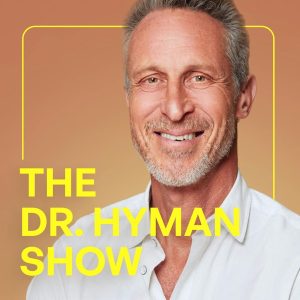
Hyman widens the longevity conversation to food systems, environmental exposures, and metabolic health. His “pegan” perspective isn’t a diet pitch; it’s a reaction to the metabolic collapse we’re watching unfold globally.
A highlight episode: the discussion with Chris Palmer on metabolic psychiatry, connecting mitochondrial dysfunction with anxiety and depression. Suddenly mental health becomes part of the longevity equation, not an afterthought.
Hyman’s interviews often include timelines—like how metabolic markers can shift within 10 days of dietary changes, or how inflammation can drop significantly with simple omega-3 adjustments. He’s not flashy, but he’s credible and consistent.
If you’re still here, you already know ageing isn’t something you “figure out” once and walk away from. It’s a long conversation with your future self, and these podcasts make that conversation a little clearer—and a lot more interesting.
So what do you actually do next?
Pick one show that fits your style, try one idea for a few weeks, and see what shifts. If you like frameworks, choose Attia. Protocols? Huberman. Mechanisms? Sinclair.
And ask yourself this: if ageing is inevitable, why let it happen accidentally?
You don’t need a perfect plan (yet). You just need a place to start.
Good podcasts won’t stop time, but they can help you get on better terms with it.
Share: