

Listen on Audible for free
Try for 30 days, you can cancel whenever you want
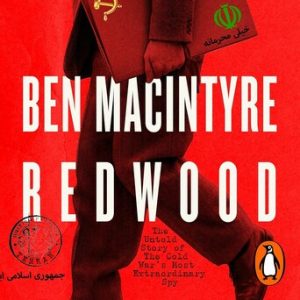
Tehran, 1981. The Shah is gone, the Ayatollah's new regime is tearing itself apart, and in the middle of it sits a very tall KGB officer with a very private problem. Vladimir Kuzichkin cannot perform in bed. He believes Western doctors can fix what Soviet ones cannot, and the only people who might get him to those doctors are the British. So he walks towards MI6, and offers the Kremlin's secrets in return.
That is the strange engine at the heart of Redwood, the code name MI6 gave him. What Kuzichkin knew was not small. Moscow was weighing a plan to topple the Islamic Republic and install a friendly government on the Gulf. Washington, as Macintyre shows, had a response ready for exactly that scenario, and it included nuclear weapons. One frightened man's confession in a Tehran lavatory ended up shaping decisions at the very top.
Macintyre has told stories of defectors before, most famously in The Spy and the Traitor. This one is messier and, in the end, darker. It is also funnier than you would expect, at least until it stops being funny at all.
A defector unlike the others
Spy writers like to say people betray their country for money, ideology, coercion or ego. Kuzichkin fits none of those boxes cleanly, and Macintyre has fun with that. The details that reviewers keep quoting are all here: the KGB station's own vodka still, the agents who posed as a married couple and then genuinely fell for each other, MI6 hunting for an astrologer with security clearance. Phoebe Pascoe in the Irish Times picked out the world-altering conversations held across a toilet cubicle partition, and they are exactly as odd as that sounds.
The other half of the story belongs to Ian McCredie, the Scottish MI6 officer who recruited Kuzichkin and ran him. Their friendship gives the book its emotional spine. When Kuzichkin's cover started to fail, he demanded that the British smuggle him out of a country where the Revolutionary Guards shot first and asked questions later. The escape section is the thriller part, and Macintyre paces it like one.
The cost nobody planned for
Where Redwood rises above a good caper is in what happened next. Britain told the Americans. The Americans, still smarting from the hostage crisis, decided to pass Kuzichkin's intelligence about a communist plot to the Iranian regime itself, at a meeting arranged through Pakistan. Tehran used it to destroy the Tudeh, Iran's communist party. Thousands were arrested, leaders were tortured into televised confessions, and a great many were killed. Macintyre's own figure runs into the thousands, and he admits nobody knows the true number.
He does not let anyone off lightly. His verdict is that the operation was a success and a failure at once, a victory that was also a grave mistake. MI6 apparently still teaches the case to recruits as a lesson in ethics, which is how Macintyre first heard of it. He has said he did not believe it until McCredie told him the story in person. The Times called the result a masterclass in the ethics of espionage, and that feels right. A Soviet grab for Iran may have been prevented. A brutal theocracy was also made stronger. The book leaves you holding both.
Why the audio edition works
Macintyre reads Redwood himself for Penguin, as he did with The Siege. He is not an actor and does not pretend to be. What you get instead is the author's own timing on the jokes and his own weight on the grim passages, which suits a book that moves between the two so often. He has spent years telling these stories on stage and radio, and it shows. Names, Russian and Persian alike, come out cleanly.
It is a long listen at around seventeen and a half hours, but the material earns it. The Guardian's Oliver Bullough said he read the print edition in a single sitting, and the audio has the same pull. If you listen on a commute, expect to miss your stop at least once during the exfiltration chapters.
The writer who keeps finding these files
Ben Macintyre is a columnist at The Times and the author of a run of true spy histories that have become a genre of their own. Agent Zigzag, Operation Mincemeat and A Spy Among Friends covered the Second World War and Kim Philby. The Spy and the Traitor followed Oleg Gordievsky, another KGB officer who came over to the British in the 1980s, and remains the natural companion to this book. SAS Rogue Heroes became the BBC drama. The Telegraph's reviewer wrote that he is incapable of writing a dull sentence, and the Wall Street Journal compared Redwood to a le Carré novel that happens to be true.
Redwood stands alone and needs no prior reading. Listeners who enjoyed The Siege, his account of the Iranian Embassy siege in London, will notice the same revolutionary Iran in the background here, seen this time from inside it. The Audible free trial covers the whole thing.
This content contains affiliate links. When you buy through these links, we may earn an affiliate commission. Host: Ben Macintyre
Country: United Kingdom
Average duration: 17 hours and 31 minutes
Frequency: Audiobook
Producer: Audible
Country: United Kingdom
Average duration: 17 hours and 31 minutes
Frequency: Audiobook
Producer: Audible
Audiobooks like Redwood: The Untold Story of the Cold War’s Most Extraordinary Spy
 Flybot
 The Let Them Theory: A Life-Changing Tool That Millions of People Can’t Stop Talking About
  Onyx Storm: Empyrean, Book 3
 The Madman's Hotel
 Nexus: A Brief History of Information Networks from the Stone Age to AI
 Odyssey: Stephen Fry's Greek Myths, Book 4
 Verity
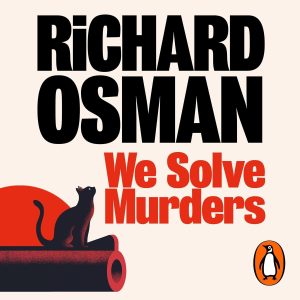 We Solve Murders
 Not Till We Are Lost: Bobiverse, Book 5
 The Wonder of Stevie
 The Mysterious Affair at Styles
 French & Saunders: Titting About (Series 7)
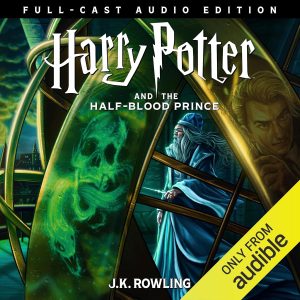 Harry Potter and the Half-Blood Prince (Full-Cast Edition)
 Harry Potter and the Order of the Phoenix (Full-Cast Edition)
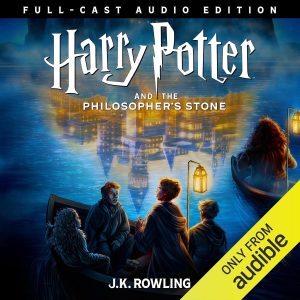 Harry Potter and the Philosopher’s Stone (Full-Cast Edition)
 Harry Potter and the Prisoner of Azkaban (Full-Cast Edition)
  It Could Have Been Her
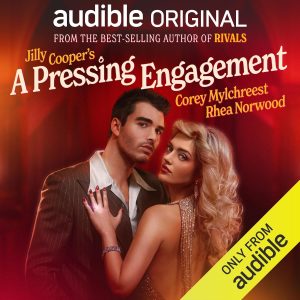 Jilly Cooper's A Pressing Engagement
 Michael
 Poison Garden: The DCI Ryan Mysteries, Book 22
 Recall
 Red Dwarf: Titan
 Starlings
 Swan Song: Diana, my sister
 The Hotel Avocado
 The Other Patient
 Unleashed
 Vibe: The Secrets of Strong Connections in a Lonely World
 We Chase Shadows
 A Deadly Episode